


Industrial Flooring Sealants & Floor Seal Technology
Techcoat Contractors has installed industrial flooring sealants across Southern California since 1988. We partner with facility managers, EHS teams, and MRO managers to protect surfaces from forklift traffic, aggressive chemical exposure, and intense daily sanitation cycles.
Over time, untreated concrete slabs develop structural cracking, severe dusting, and compliance liabilities. Implementing engineered flooring sealants helps protect these surfaces, providing a cost-effective alternative to complete slab replacement.
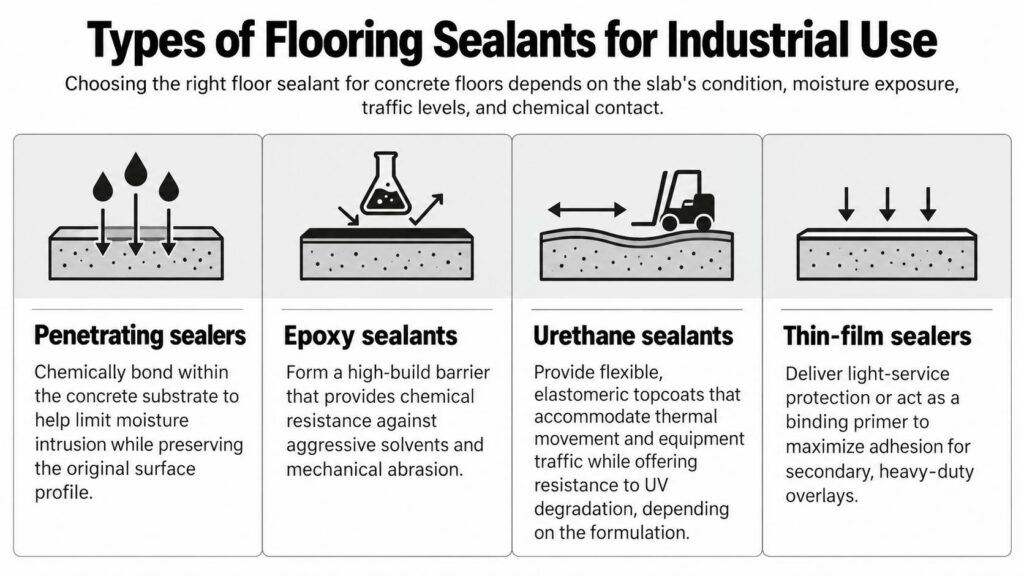
Types of Flooring Sealants for Industrial Use
Industrial environments demand distinct polymer chemistries to withstand operational wear. We evaluate your daily exposure profile to match the exact commercial concrete floor sealer to your facility.
Choosing the right floor sealant for concrete floors depends on the slab’s condition, moisture exposure, traffic levels, and chemical contact. Penetrating sealers help protect the concrete from within, while epoxy and urethane systems provide surface protection suited to demanding industrial conditions. We assess these factors to recommend a sealing system that supports your facility’s maintenance requirements and long-term floor performance.
- Penetrating sealers. Chemically bond within the concrete substrate to help limit moisture intrusion while preserving the original surface profile.
- Epoxy sealants. Form a high-build barrier that provides chemical resistance against aggressive solvents and mechanical abrasion.
- Urethane sealants. Provide flexible, elastomeric topcoats that accommodate thermal movement and equipment traffic while offering resistance to UV degradation, depending on the formulation.
- Thin-film sealers. Deliver light-service protection or act as a binding primer to maximize adhesion for secondary, heavy-duty overlays.
How Floor Seal Technology Improves Safety & Cleanliness
Untreated, porous concrete slabs absorb hazardous liquids, microbial pathogens, and abrasive particulate matter. Over time, subsurface contamination accelerates concrete spalling and can create slip hazards in wet production zones.
Integrating advanced floor sealant for concrete floors helps isolate the concrete substrate from contaminants and streamline sanitation protocols. This protective barrier minimizes deep-surface contamination while supporting personnel traction control.
For food processing, pharmaceutical, and chemical environments, these barriers can support facility hygiene and safety requirements. We integrate custom aggregate additives into high-durability resins to deliver textured surfaces that help reduce slip risks. The appropriate system depends on the facility’s operating conditions and applicable safety standards.
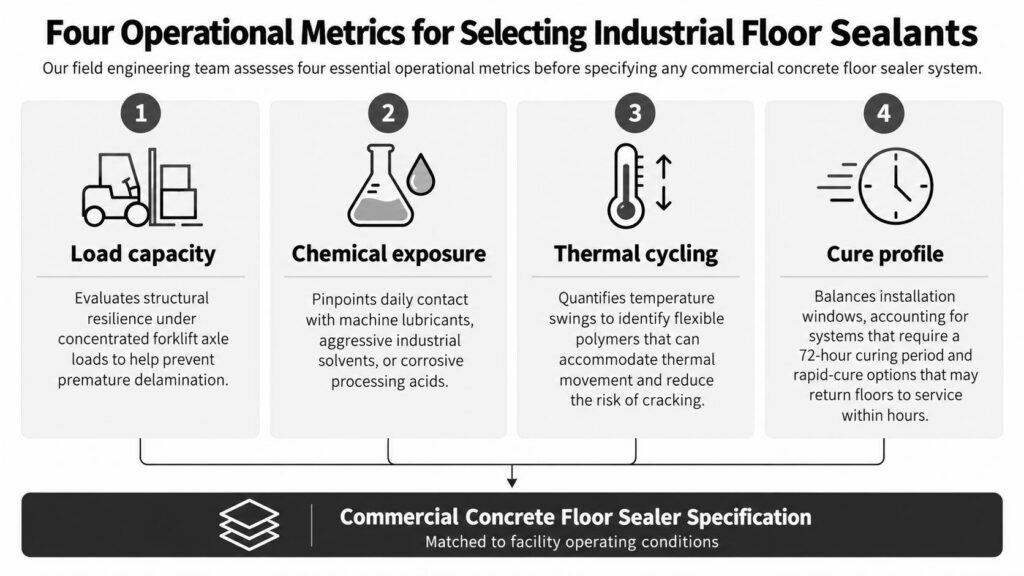
Choosing the Right Sealant for High-Traffic Manufacturing Areas
Heavy industrial environments subject floor slabs to persistent mechanical and thermal stressors. Our field engineering team assesses four essential operational metrics before specifying any commercial concrete floor sealer system:
- Load capacity. Evaluates structural resilience under concentrated forklift axle loads to help prevent premature delamination.
- Chemical exposure. Pinpoints daily contact with machine lubricants, aggressive industrial solvents, or corrosive processing acids.
- Thermal cycling. Quantifies temperature swings to identify flexible polymers that can accommodate thermal movement and reduce the risk of cracking.
- Cure profile. Balances installation windows, accounting for systems that require a 72-hour curing period and rapid-cure options that may return floors to service within hours.
Applying the correct commercial concrete floor sealer over an aging slab, following proper surface prep and repair, can extend your infrastructure’s lifespan without requiring extensive concrete replacement.
Why Work With a Professional Floor Sealing Contractor
Coating application over unprofiled or contaminated concrete compromises adhesion and can lead to rapid delamination and localized bubbling. Professional floor sealing contractors help reduce this risk by performing mechanical substrate preparation before applying the selected system.
TECHCOAT utilizes precision diamond grinding and heavy shot blasting to achieve the appropriate International Concrete Repair Institute (ICRI) Concrete Surface Profile (CSP). This controlled mechanical abrasion removes contaminants and prepares the concrete for coating adhesion. Our field crews coordinate installation around tight schedules to help minimize operational downtime and maintain clean, safe workspaces.
Secure Your Industrial Sealant Needs Today
Unsealed concrete degrades rapidly under heavy industrial use. We operate as experienced floor sealing contractors capable of executing full-scale facility rehabilitations. Whether your facility requires flexible urethane coatings, chemical-resistant epoxies, or a reliable commercial concrete floor sealer, we deliver flooring solutions suited to demanding industrial environments. Our heavy-duty flooring sealants have been used to protect facilities associated with Boeing, General Motors, Honeywell, and Nabisco.
Contact Techcoat Contractors today to discuss your facility requirements and schedule a site evaluation.
Frequently Asked Questions
How often should concrete floors be resealed?
Resealing frequency depends on the type of sealant, floor traffic, chemical exposure, and maintenance practices. Industrial floors exposed to heavy forklift traffic or frequent chemical cleaning may require more frequent inspections and maintenance than lightly used areas. Techcoat Contractors can evaluate your existing floor and recommend an appropriate maintenance schedule.
How do I know when my concrete floor needs resealing?
Signs include visible wear, reduced stain resistance, surface dusting, peeling, or areas where liquids begin penetrating the concrete. A professional inspection can determine whether the floor needs resealing, localized repairs, or more extensive coating restoration.
Can a floor sealant for concrete floors withstand heavy industrial traffic?
Yes, provided the sealing system is matched to the facility’s operating conditions. Epoxy and urethane systems can offer protection against abrasion, equipment traffic, and chemical exposure, depending on the product specifications and installation requirements. Proper surface preparation is also essential for long-term adhesion.
CAPABILITIES
- Services
Acid Etching
Cleaning
Diamond Grinding
Finishing
Floor Re-coating
Inspection
Installation
Material Selection
Renovation
Repair and Restoration
Scarification
Shot Blasting
Surface Preparation
Testing
Waterproofing and Resurfacing
Additional Information
- Floor Sealant Features
Durable
Non Toxic
Waterproof
- Applications
Pre-Coating Sealant
Storage Areas
Warehouse Floors
- Industries Served
Food and Beverage
Aerospace
Automotive
Commercial Spaces
Manufacturing
Chemical
Petrochemical Processing
Packaging
Electronics/ Telecommunications
And Many More
- Client List
Alcoa Fastening Systems
And Many More
BF Goodrich
Boeing
CBS Television Network
General Motors/ Delphi Battery
Honeywell
McDonnell Douglas
Nabisco
Nakano Foods
Walt Disney Imagineering